WARNING: RISK OF SERIOUS CARDIOVASCULAR AND GASTROINTESTINAL EVENTS
Cardiovascular Thrombotic Events
-
Nonsteroidal anti-inflammatory drugs (NSAIDS) cause an increased risk of serious cardiovascular thrombotic events, including myocardial infarction and stroke, which can be fatal. This risk may occur early in treatment and may increase with duration of use.
-
SPRIX ® is contraindicated in the setting of coronary artery bypass graft (CABG) surgery.
Gastrointestinal Bleeding, Ulceration, and Perforation
-
NSAIDS cause an increased risk of serious gastrointestinal (GI) adverse events including bleeding, ulceration, and perforation of the stomach or intestines, which can be fatal. These events can occur at any time during use and without warning symptoms. Elderly patients and patients with a prior history of peptic ulcer disease and/or GI bleeding are at greater risk for serious GI events.
What is the most important information I should know about SPRIX and prescription Nonsteroidal Anti-inflammatory Drugs (NSAIDs)?
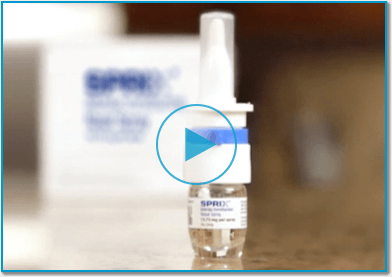
Sprix (ketorolac tromethamine) Nasal Spray is an NSAID.
NSAIDs can cause serious side effects including, increased risk of a heart attack or stroke that can lead to death. This risk may happen early in treatment
and may increase with increasing doses of NSAIDs and with longer use of NSAIDs.
NSAIDs can also cause increased risk of bleeding, ulcers, and tears (perforation) of the esophagus (tube leading from the mouth to the stomach), stomach
and intestines which may occur anytime during use, without warning symptoms, and may cause death.
See the Boxed Warning: Risk of Serious Cardiovascular and Gastrointestinal Events
Do not take SPRIX right before or after a heart surgery called a “coronary artery bypass graft (CABG).”
Do not take SPRIX after a recent heart attack, unless your healthcare provider tells you to. You may have an increased risk of another heart attack if you
take NSAIDs after a recent heart attack.
The risk of getting an ulcer or bleeding also increases with:
- Taking medicines called “corticosteroids”, “anticoagulants”, “SSRIs”, or “SNRIs”
- Increasing doses of NSAIDs
- Longer use of NSAIDs
- Smoking
- Drinking alcohol
- Poor health
- Advanced liver disease
- Bleeding problems
SPRIX should only be used:
- Exactly as prescribed
- At the lowest dose possible for your treatment
- For the shortest time needed
What is SPRIX ®?
SPRIX ® (ketorolac tromethamine) is used in adult patients for the short term (up to 5 days) management of moderate to moderately severe pain that requires analgesia at the opioid level.
Limitations of Use
- Sprix is not for use in pediatric patients less than 2 years of age.
Do not use SPRIX ®:
- If you are allergic to ketorolac or any components of the drug product.
- If you have had an asthma attack, hives, or other allergic reaction with aspirin or any other NSAIDs.
- Right before or after heart bypass surgery
- If you have active ulcer disease or any history of bleeding in the stomach or intestines
- If you have had bleeding in the brain, a tendency to bleed, or have decreased ability for your blood to clot
- If you have kidney disease
- If you are taking probenecid or pentoxifylline
- For more than 5 days or with other formulations of ketorolac or with other NSAIDs
Before taking SPRIX or any NSAID, tell your healthcare provider about all of your medical conditions, including if you:
- have liver or kidney problems
- have high blood pressure or heart failure
- have asthma
- have bleeding problems
-
are pregnant or plan to become pregnant. Taking NSAIDs, including SPRIX at about 20 weeks of pregnancy or later may harm your unborn baby.
If you need to take NSAIDs for more than 2 days when you are between 20 and 30 weeks of pregnancy, your healthcare provider may
need to monitor the amount of fluid in your womb around your baby. You should NOT take SPRIX, after about 30 weeks of pregnancy.
- Are breastfeeding or plan to breast feed. Some SPRIX can pass into your breast milk.
Tell your healthcare provider about all of the medicines you take, including prescription or over-the-counter medicines, vitamins or herbal supplements. SPRIX and some other medicines can interact with each other and cause serious side effects. Do not start taking any new medicine without talking to your healthcare provider first.
What are the possible side effects of SPRIX?
See “What is the most important information I should know about SPRIX and prescription Nonsteroidal Anti-inflammatory Drugs (NSAIDs)?”
- new or worse high blood pressure
- heart failure
- liver problems including liver failure
- kidney problems including kidney failure
- low red blood cells (anemia)
- life-threatening skin reactions
- life-threatening allergic reactions
Other side effects of NSAIDs include: stomach pain, constipation, diarrhea, gas, heartburn, nausea, vomiting, and dizziness.
Most common side effects with SPRIX include: discomfort in the nose; pain in the nose; increased tears; throat irritation; decreased amount of urine;
rash; slow heart rate; increased liver enzymes; high blood pressure; stuffy nose.
Keep SPRIX away from your eyes. If you get SPRIX in your eyes, wash out the eye with water or saline, and call a doctor if irritation persists for more than
an hour.
Get emergency help right away if you get any of the following symptoms:
- Shortness of breath or trouble breathing
- chest pain
- weakness in one part or side of your body
- slurred speech
- swelling of the face or throat
Stop taking SPRIX and call your healthcare provider right away if you get any of the following symptoms:
- nausea
- more tired or weaker than usual
- diarrhea
- itching
- your skin or eyes look yellow
- indigestion or stomach pain
- flu-like symptoms
- vomit blood
- there is blood in your bowel movement or it is black and sticky like tar
- unusual weight gain
- any type of rash or fever
- swelling of the arms, legs, hands and feet
If you take too much SPRIX, call your healthcare provider or get medical help right away.
These are not all the possible side effects of NSAIDs. For more information, ask your healthcare provider or pharmacist about NSAIDs.
Call your doctor for medical advice about side effects. You may report side effects to FDA at 1-800-FDA-1088.
Please see full Prescribing Information, including Boxed Warning and patient Medication Guide.